That morning, the color temperature was off
March 11, 2024, 10:15 a.m. Our assembly lead, Zhang, walked into my office holding a tray of Nichia 519A LEDs. Six words that made my stomach drop: "The color temperature is off."
Wait. I ordered Nichia 519A. High CRI, 90+, 2700K warm white. We'd used this supplier before. What could go wrong?
Let me back up a second.
I'm the quality and brand compliance manager at a 12-person lighting company. I review every component before it goes to assembly—roughly 200 SKUs annually. In 2023, we rejected 9% of first deliveries, mostly due to color temperature drift and packaging damage. That's my job: catch things before they reach the customer.
But here's the thing I'd been doing that I'm not proud of. I'd mentally categorized small orders as "low priority." A $2,400 trial run for a new boutique hotel lobby? Fine, but I wasn't going to lose sleep over it. I figured the real attention should go to the $50,000+ orders.
That thinking nearly cost us an $18,000 follow-up.
The purchase order said one thing. The tech sheet said another.
The hotel chain had ordered a batch of Nichia 519A LEDs for their new lobby chandelier. If this trial went well, three more properties were waiting. We'd also supply the pool deck LED strip lights and the guest room Zigbee thermostats. We even threw in Nichia LED flashlights for the concierge desk—small thing, but they loved the samples.
I did a quick visual check when the LEDs arrived. Looked fine. Nichia 519A is known for high CRI—90+ is pretty standard for that chip. We ordered 2700K warm white, and that's what the tech sheet said.
I almost sent them straight to assembly. But Zhang stopped me. "Did you actually measure the CCT? Not just the label?"
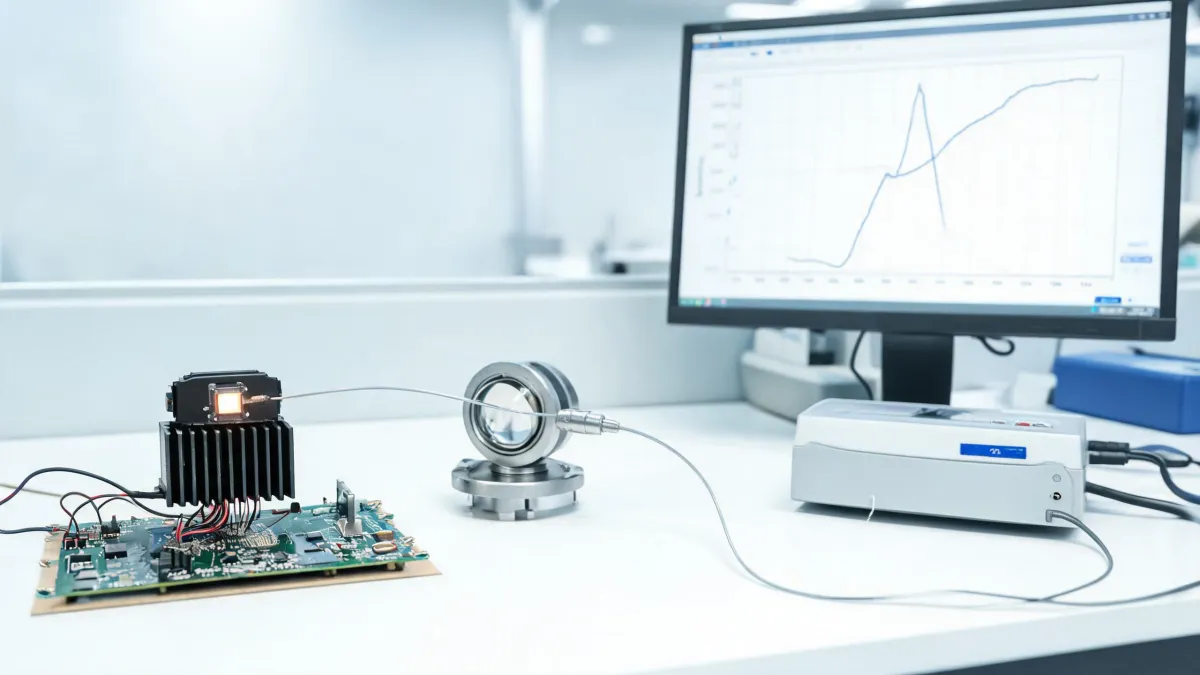
We pulled ten pieces and ran them through our spectrophotometer. Most were fine. But three reels—about 12% of the batch—read closer to 2900K. The CRI was still decent, but when you're mixing batches inside a dimmable chandelier, that drift shows up. Some bulbs look warmer, some cooler, and guests notice.
I picked up one of the Nichia flashlights from our sample shelf, clicked it on, and looked at the LED reel again. Still off. I called the supplier.
Their quality manager said something that made me realize how stupid I'd been: "Oh, you wrote 'warm white' on the PO. We understood that as the standard 2700–3000K range."
Our purchase order said "warm white." Our technical spec sheet—attached to an email thread from two weeks earlier—clearly said 2700K ± 100K. The problem was, the PO didn't reference that email. The supplier's standard practice was to pull specs from the PO itself. Two documents, two different definitions of the same thing.
To be fair, the drift was about Delta E 2.5 as measured against our target. Pantone's color matching guidelines note that Delta E between 2 and 4 is visible to trained observers. In a dimmable chandelier mixing multiple reels, that's enough to make the whole fixture look uneven. On camera, it gets worse.
I braced myself for the usual runaround.
Instead, their quality manager said: "We'll rework the batch. Ship it tonight. No charge. You can keep the old ones for testing."
No formal complaint form. No expedite fee. No "please be more careful next time." Just action.
That's not what I expected. Our primary OEM supplier—a much larger company—would have demanded a formal NCR, quoted us a rush fee, and put us at the back of the queue for three weeks.
But this supplier, whose order was just $2,400, treated it like it mattered. "Your trial order is important to us," they said. "We don't cut corners on small runs."
Honestly, that surprised me. Everything I'd read about B2B supplier behavior suggested most vendors wouldn't bother with a few-hundred-unit expedite. In practice, I found the opposite.
The IP65 problem nobody caught
If the color temperature issue wasn't enough, the pool deck situation could have been much worse.
While we were sorting out the LED rework, our site foreman sent a photo from the hotel. Our crew was installing LED strip lights along the pool edge. He asked: "Can these get rained on?"
Our spec called for IP65. IP6X means dust-tight. IPX5 means protected against water jets. IP65 is fine for outdoor use with some shelter. But the pool deck? Standing water along the cove edges, splashing, rain runoff—that's a different story.
I reread the LED strip spec sheet. It did say IP65, but in fine print: "Suitable for sheltered outdoor areas." Nothing about immersion.
If we'd installed those strips, the whole run would've been toast within a season. Rust, short circuits, flickering—the hotel manager would've been furious. And the fix wouldn't have been cheap.
I checked the FTC Green Guides. According to FTC guidance (16 CFR Part 260), environmental claims like "waterproof" need solid evidence. IP65 isn't waterproof—it's water-resistant. Claiming otherwise without testing could be a compliance problem, not just a quality problem.
We swapped four rolls to IP68-rated strips. Extra cost: $400. Install delay: two days. But it avoided a moisture-related failure that would've been a nightmare to fix post-install.
The order that almost wasn't
The hotel project wrapped on time. The lobby chandelier ran the correct Nichia 519A LEDs. The pool deck got IP68 strips. The Zigbee thermostats in the guest rooms worked fine—we coordinated with the supplier to make sure our LED driver signals didn't interfere with the Zigbee mesh. The Nichia flashlights at the concierge desk even got fresh batteries.
Two weeks after handover, the hotel's project manager emailed. "The other three properties are waiting on our green light. Total order: $18,000. You interested?"
I replied within the hour.
The supplier who'd reworked our $2,400 trial batch—the one who didn't make a fuss, didn't nickel-and-dime, didn't make me beg—got the entire follow-up order. I didn't even ask for MOQ concessions. Didn't need to.
What I'd do differently
Here's what I keep coming back to.
Small orders are a test. How a supplier handles a $200 or $2,400 order tells you everything about how they'll handle $20,000. The ones who treat small runs with respect are usually the ones you keep. The ones who make you feel like a nuisance? They cost you more in the long run.
The real communication gaps are invisible. We said "warm white." They read "standard range." Our tech sheet said "2700K ± 100K." Three versions of the same request, three different outcomes. Now I put the full spec—including CCT tolerance, batch labels, and acceptance criteria—directly on the PO. No attachments, no assumptions.
Water rating isn't marketing. IP65 vs IP68 is the difference between "fine for a porch" and "safe for a pool deck." And per FTC rules, you can't casually call something "waterproof" without evidence. If you've ever installed strip lights around a pool, you know that $400 saved up front isn't worth the $4,000 cleanup later.
Never skip the final check because you're in a hurry. I almost let those LEDs go to assembly without measuring. "It's a small order, we're behind schedule, it's basically the same as last time." Except it wasn't. If I'd skipped it, the lobby chandelier would've shipped with mismatched color temperatures. The hotel would've looked blue in every guest photo. That's not the kind of mistake you come back from.
That trial order was $2,400. The follow-up was $18,000. But really, the supplier who reworked that batch without a fuss? That's the smallest order I've ever seen turn into the biggest win.
I've paid small-order prices before and gotten small-order service in return. That's the deal, right? Small order, small attention. But it doesn't have to be.
So next time you're tempted to think "it's just a $200 order, it doesn't matter"—remember what it could turn into.