I still remember the afternoon in March 2022 when the first 1,200 units of our private-label industrial high bay line arrived from overseas. I have handled B2B lighting procurement for a regional distributor for eight years, and I have made my share of mistakes. That one was the most expensive because I knew better.
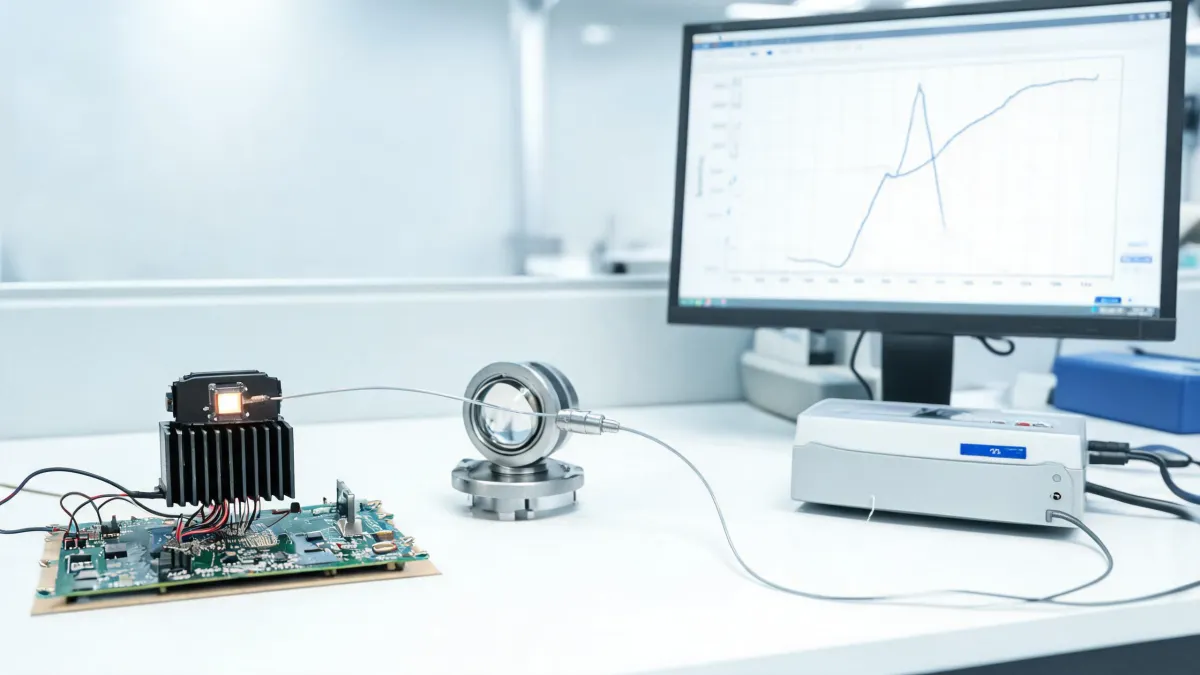
The pallets were neat. The boxes had our logo. The spec sheet said Lumileds COB LED, and I was proud of that, because it promised our wholesale customers a genuine, name-brand light engine. Then our quality manager took a random fixture apart, put a spectrometer on it, and stared at the results.
She said the color temperatures were all over the place. Some fixtures measured around 3800K, others around 4600K. The CRI spread went from 74 to 82. On paper, every fixture used a Lumileds COB LED. In reality, the order was a mix of different Lumileds components from different bins, and I was the one who wrote the spec.
When 'Lumileds' Isn't a Spec
When I first started handling wholesale lighting sourcing, I assumed that any authentic Lumileds COB LED was basically the same quality. I thought the brand did the heavy lifting and my job was just to make sure I was not buying a fake. It turns out the brand is only the starting line.
At that time, our catalog team was building a new line of high bays for the industrial lighting wholesale market. We wanted one SKU that could cover warehouses, workshops, and retail back-of-house. I specified 150W, 4000K, CRI 80, and 17,000 lumens. In the LED type field, I wrote Lumileds COB. I thought that was enough.
It wasn't. Lumileds makes many COB variants, each with different chip sizes, operating current, CCT bins, CRI classes, and color consistency tolerances. A Lumileds COB could mean a 3000K reflector-friendly COB or a 5000K high-bay COB. A 3-step MacAdam ellipse color tolerance is not the same as a 5-step one. The difference may be invisible in a single sample, but it is very visible when you install fifty fixtures side by side in a warehouse.
Here is something that suppliers do not always tell you: the shorter your spec, the more room they have to make their quote attractive. If you write Lumileds COB LED without an exact part number, you are giving the factory permission to fill the order from whatever Lumileds COB inventory it has available. If you are lucky, it is consistent. If you are not, it looks like our order.
The Sample Looked Fine. The Production Order Didn't.
Our process leading up to that order seemed normal. We got an RFQ from an industrial lighting manufacturer we had never used before. The price was 19% lower than our existing supplier. The photometric data, power factor, and housing drawings all looked reasonable. The sample passed basic tests. The only odd thing was that the spec sheet listed Lumileds COB without a usable part number. I told myself it was a translation issue.
Actually, my operations manager had warned me a month earlier. He said, if a purchase order does not name a Lumileds part number and a bin tolerance, then it is not a spec. It is a hope. I appreciated the line. I even wrote it in my notes. Then I ignored it because the price was good and the deadline was tight.
The first 300 fixtures came in, and I will be honest: they looked fine. We turned them on. They were bright. I signed off on production. The full 1,200 pieces arrived a few weeks later, and that is when the color mismatch showed up. Some cartons looked noticeably warmer than others. The fixtures all had Lumileds-branded COBs inside, but the brand alone did not guarantee a repeatable product.
I am not 100% sure why the factory thought this was acceptable. My best guess is they were using leftover Lumileds COBs from other jobs to keep their quoted price low. They probably never expected a distributor to check. But for wholesalers, repeatability is the whole game. If an electrical contractor buys a pull of fixtures and they do not match, the distributor gets the phone call, not the component vendor.
The financial hit was real. We paid for return freight, re-inspection, and overtime to replace the bad fixtures with ones from a manufacturer that respected the full spec. I do not have hard data on the exact line-item cost because it got tangled with lost sales and a delayed catalog launch. My estimate is somewhere in the $10,000–$15,000 range, including a fair amount of stomach-ache.
Efficiency Is the Fix, Not Just a Better Attitude
What changed after the mistake was not only our trust in that manufacturing plant. It was our entire sourcing workflow. We realized that the slow, manual way we were writing RFQs was actually the root cause. When information lives in email threads and editable documents, someone will always forget to copy the exact part number.
Switching to a digital spec template eliminated most of that risk. Every RFQ now has required fields for the LED manufacturer, the complete part number, CCT, CRI, forward current, and allowed MacAdam tolerance. The system will not create a purchase order until those fields are filled. That process change cut our RFQ turnaround from roughly five days to two, because we stopped going back and forth over vague descriptions. In my opinion, efficiency is not just a cost advantage. It is a quality-control tool.
How to Choose Industrial Lighting for Wholesale
If you are buying industrial lighting from a manufacturer or designing your own catalog SKUs, stealing our checklist is a good start.
- Write the exact Lumileds part number. If a factory says Lumileds COB but cannot name the exact part number on the PO, stop. Genuine Lumileds COB LEDs come in specific part numbers with CCT, CRI, and bin tolerance details. Lumileds is the family, not the address.
- Require the LM-80 and TM-21 reports for that exact part. According to IES LM-80-15, LED lumen maintenance is measured under controlled current and temperature. TM-21 then projects L70 life. A generic report from a different component proves nothing.
- Define color consistency. For industrial lighting, a 3-step MacAdam ellipse is common when consistency matters. If you do not say it, you may get a 5-step or even looser bin, and you will see the difference across a warehouse floor.
- Verify certifications on the actual fixture. UL 1598 and UL 8750, or the equivalent for your market, should appear on the fixture label, not just in the PDF quote. DLC listing is worth checking for rebates and customer confidence.
- Ask about past wholesale orders with the same component. You are not buying one fixture. You are buying repeatability. Ask for references where the same Lumileds COB LED part was supplied in multiple batches without issues.
A good industrial lighting manufacturer will make this easy. They will say this fixture uses a specific Lumileds LUXEON COB with a known part number, and here is the LM-80 report for that SKU. If they hesitate, that is a red flag.
Bottom Line
The mistake had a silver lining. It forced us to build the discipline that we now use on every product category, from LED strips to panels. Our industrial lighting catalog now states component-specified for every SKU. Wholesale customers know that if the catalog says Lumileds COB LED, there is a traceable part number behind it.
I do not think all traditional sourcing methods are wrong. Custom projects still need back-and-forth conversations. But for standardized industrial lighting, repeatability is the product. The faster you can lock the spec down, the better off you are, and so is the electrician who installs that fixture two years from now.
If you remember one thing, remember this: a Lumileds COB LED is a reason to be confident only if your paperwork is as exact as the chip. Otherwise, you are buying a logo, not a lighting solution.