When a purchase order says 'Lumileds LED' and nothing else, it makes me nervous. When a quotation says 'Lumileds COB LED' with no supporting test data, I read that as a starting line, not a finish line.
I run quality and compliance at a B2B lighting OEM. My team reviews roughly 250 product samples a year before they are offered to wholesale distributors. In Q1 2024, we rejected 11% of first-article samples for specification drift. Maybe 12% if we include preshipment audits; I am not counting those. The interesting part: the issue was rarely a fake chip. Most of those products did contain a genuine Lumileds LED. They still failed because of driver selection, thermal design, or compliance paperwork.
What a 'Genuine Lumileds COB LED' Did Not Tell Us
The case that changed my mind happened in November 2023. A vendor sent samples of a 40W downlight engine. Their sales pitch had two selling points: it used a Lumileds COB LED and it claimed a 50,000-hour L70 lifetime. Those two facts were supposed to close the deal.
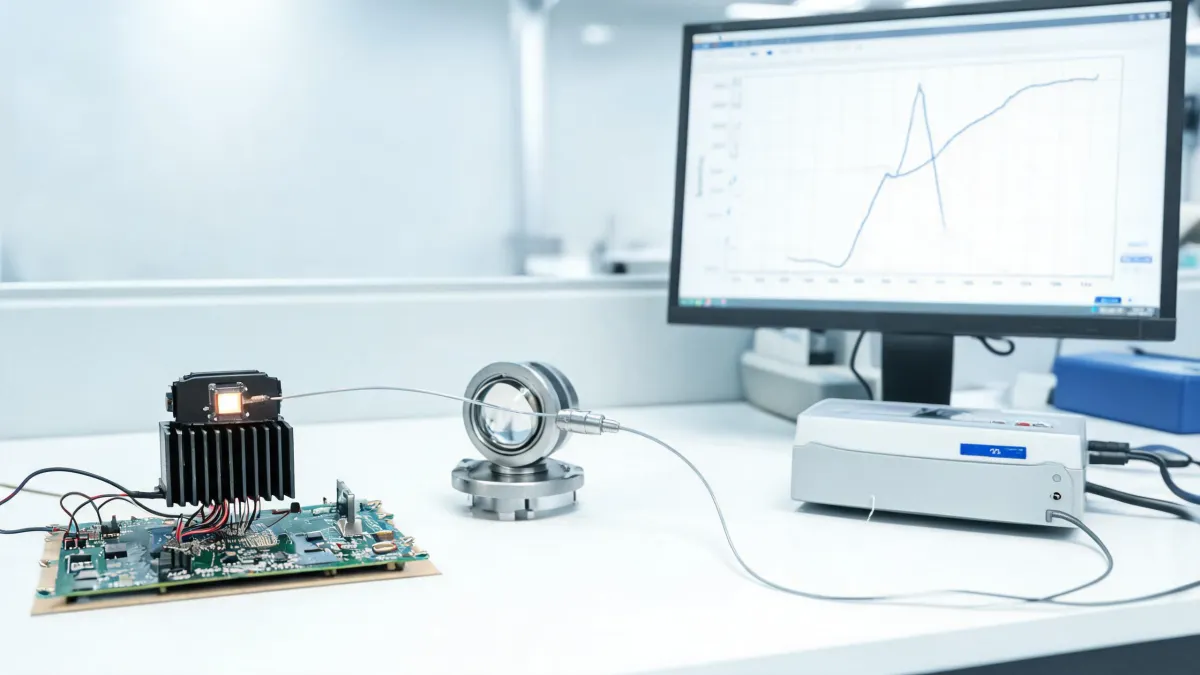
We ran the sample long enough to measure the module's TC point. In a 25°C room, the thermocouple settled 9°C above the TC point that the datasheet allowed for the claimed lifetime. The product output looked acceptable during the first 20 minutes, but a 50,000-hour claim is a thermal question, not a brand question. The vendor had swapped in a smaller heat sink from an older version, and the driver was configured slightly differently from the one in the test report. When we asked for corrected TM-21 and lifetime projections, the quote went quiet. We rejected the batch before it reached production.
This is the reason I now tell buyers not to stop at component brands. A Lumileds COB LED is only part of a light engine. The driver must supply the right current, the heat sink needs to keep the TC point where it should be, and the optics must be matched to the chip. If any of those are wrong, the chip brand will not save the finished product.
Wholesale Consistency Matters More Than Brand Labels
For a light bar distributor or anyone buying light bars wholesale, the risk shows up differently. You are not buying one sample; you are buying a container of products that need to look and perform the same. That is where brand labels are weakest.
In March 2024, we audited three '4000K Lumileds LED' tube suppliers. All three used authentic packaged LEDs. Only one delivered CCT within the promised 3-step MacAdam ellipse across 20 random samples. The other two fell outside that range because they selected lower-cost bins and did not test final fixtures. On site, those tubes would look fine if installed alone. Installed beside each other, the color mismatch would be obvious.
For that reason, our approval forms now require more than a brand name. They require a bin code or a measured CCT/Duv limit, a minimum lumen output at the specified drive current, and a max case-temperature reading from the final assembly. These requirements apply to LED tubes, panels, and light bars alike.
How to Choose an LED Tube for Wholesale: Four Questions
When wholesale buyers ask me how to choose an LED tube for wholesale, I give them the same four questions we use:
- Which exact Lumileds LED package and bin is specified? If a supplier cannot name the part, that is an instant red flag.
- Does the claimed lumen output and wattage match this LED package at its recommended operating current?
- Does the driver model in the sample match the driver model in the test certificate? This has caught more suppliers than you would think.
- What is the production tolerance for CCT and luminous flux across batches? A good answer will include a MacAdam ellipse and a percentage tolerance.
If the answer to any of these is 'trust us, it's Lumileds,' I move on. Not because Lumileds is unreliable, but because quality assurance is not a matter of trust in a component. It is a matter of evidence from the final product.
The Honest Caveat
This level of checking is not equally important in every deal. If you are a one-time buyer moving commodity tubes at minimum price and you are not the one handling warranty claims, skipping some of this might be a rational business decision. I get why price-first buyers do that. Budgets are real, and not every lighting order needs a full test regimen.
But if you are building a wholesale brand or placing repeat orders with your name on the packaging, the value of verification goes up dramatically. A single bad batch of 5,000 light bars can cost more in freight, returns, and lost customers than a year of sample testing. I have seen that math play out on both sides.
Use Lumileds as the Baseline, Not the Substitute
Let me be clear: Lumileds is a strong baseline. Does this mean it is overrated? Not in my experience. When a supplier says they are using a Lumileds COB LED or Lumileds LED components, I treat that as an advantage. It gives the product a better starting probability than most alternatives. But probability is not specification.
The goal is not to distrust Lumileds. The goal is to keep its performance from being diluted by everything between the LED package and the shipping carton. When you standardize around the brand and then verify the final product, you get the best of both: a respected component foundation and a finished light that has to prove itself before your warehouse stock becomes a customer problem.
That is what I recommend to any light bar wholesale buyer or private label team. Start with Lumileds. Then check, sample, and measure like the order depends on it. In quality management, it usually does.