The "It Depends" Answer—Now With Actual Use
If you've spent more than an hour researching LED lighting suppliers, you've read this sentence: "The right choice depends on your situation." Technically true. Completely useless.
Let me make it useful.
I'm a procurement manager at a mid-sized lighting company. I've managed our LED lighting wholesale budget for six years, tracked roughly $180,000 in cumulative orders, and compared quotes from a dozen-plus suppliers. I built my own total cost of ownership spreadsheet because I got burned twice on "low, low price" quotes that didn't survive contact with reality.
Here's how I think about the LED strip OEM vs private label question. The answer splits into three scenarios. Which one you land in depends on your revenue, your customer base, and how much risk you can absorb.
Scenario A: You're Early-Stage and Need to Get to Market
If I told you to start with OEM, I'd be lying to you. Tooling costs and minimum order quantities will crush a new operation.
In 2021, we almost signed an OEM agreement with a 10,000-meter minimum per SKU. It would have locked up $32,000 in inventory—for a company doing maybe $15,000/month at the time. We would have drowned.
Private label was the right call then, and it still is for businesses at that stage:
- MOQs in the 2,000–5,000 range
- No engineering or tooling fees
- Products that are already tested and selling somewhere
The catch: you're inheriting the factory's component choices. That's where the "cheapest" option on paper starts leaking money.
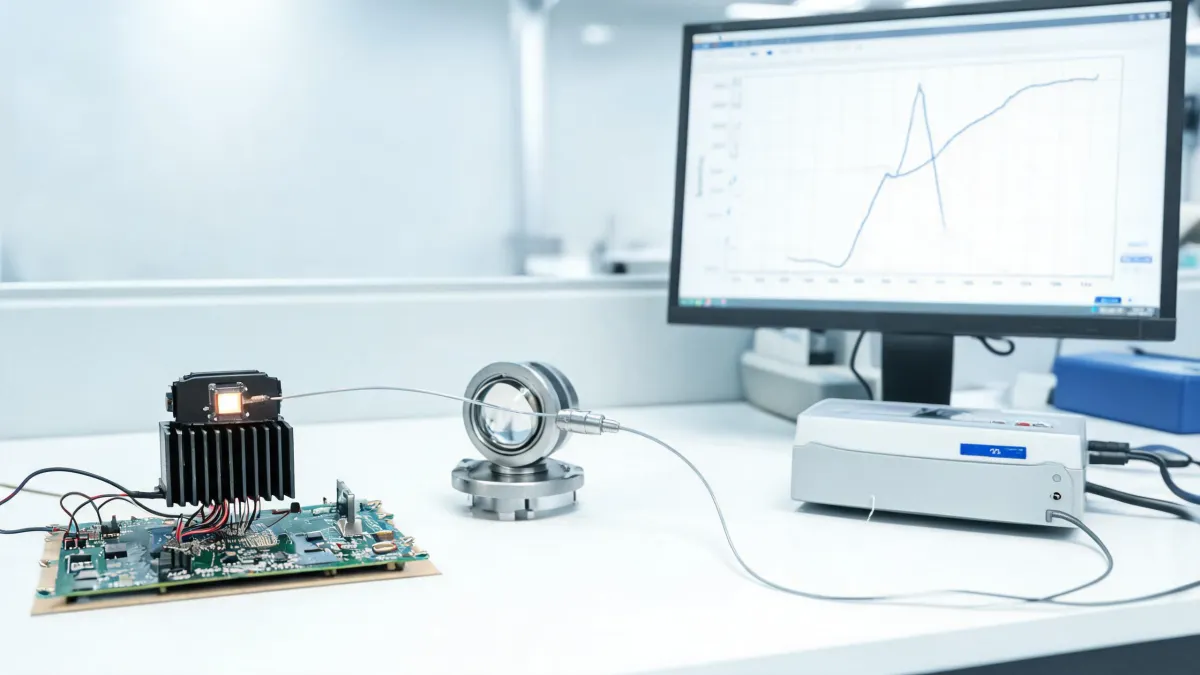
When I compared two private label suppliers side by side in 2023—both claiming "CRI 90" on 12V strips—the output difference was visible on a lux meter. Not lab equipment. A simple handheld meter. One strip used an unbranded LED chip. The other used Lumileds. Same CRI claim, noticeably different illuminance and color consistency.
Seeing those two samples side by side made me realize we'd been underpricing quality in our own product line. Not ideal, but workable—we fixed it.
Private label isn't a trap. It's an entry point. Buy smart, test every batch, and don't believe a spec sheet until your own QC signs off.
Scenario B: You Have a Brand—And It's Worth Something
This is where "quality is your brand" turns from a slogan into a sales argument.
When your customers are electricians, lighting designers, or facility managers, the strip is your reputation in physical form. The color shifts between batches. The strip dims after 18 months. Your customer doesn't blame the factory. They blame you.
This is why Lumileds COB LEDs show up in so many OEM specs.
I have mixed feelings about branded components, honestly. On one hand, they cost more—I want to say Lumileds chips run 15–30% above generic alternatives, though I might be misremembering the exact spread; it varies by spec and volume. On the other hand, when I audited our 2024 returns data, the SKUs built with Lumileds components had a return rate of 1.8%, versus 4.2% for our unbranded SKUs.
That gap is real money. A 2.4% return rate difference might not sound dramatic. But when you add inspection time, customer service hours, and replacement shipments, the cheaper component quietly eats its savings. Not in a way that shows up on a quote comparison. In a way that shows up on your P&L.
Per FTC guidelines (ftc.gov), advertising claims must be truthful and substantiated. That matters here because selling a strip as "Lumileds-based" and shipping it with an equivalent chip is not just a bad trade practice—it's the kind of claim that gets you in regulatory trouble. In six years, I've caught two suppliers trying to ship first batches with "equivalent" unbranded chips. Our written component confirmation and a batch-code spot-check on arrival caught both. That paperwork has saved me more than any discount I've ever negotiated.
Scenario C: You're Ready to Run Both Lines
Here's the option most buyers don't realize exists: you don't have to pick one.
A lighting distributor I know puts about $400K a year across two tiers:
- A private label line of commodity strips for price-sensitive contractors
- An OEM line using Lumileds COB LEDs and specified drivers, sold as their commercial-grade range
The two lines keep the brand honest: the first is priced to win, the second is positioned to build reputation. It works—but it's not free.
What I mean by "not free" is that running two models means maintaining two QC protocols, two supplier relationships, two inventory strategies, and enough discipline to keep the cheaper line from cannibalizing the premium one. Without that overhead, you end up with a confused catalog and a warehouse full of products you can't differentiate. Worse than expected, if you let it drift.
How to Know Which Scenario You're In
Here's a self-check that's served me well:
- What's your monthly LED revenue? Under $15–20K/month, start with private label. Above that, start building a business case for OEM on your top two SKUs.
- Who's the end customer? If they're professionals—electricians, designers, contractors—they notice inconsistent quality. Sell to pros, and the OEM decision answers itself.
- Can you survive a bad batch? If one defective delivery could end a client relationship, you shouldn't be rolling the dice on uncontrolled components. The quality tax is cheaper than the reputation tax.
Oh, and one more thing. The OEM vs private label decision matters less than your supplier selection. I've seen sloppy private label factories and excellent OEM manufacturers, and everything in between. Audit the factory. Test the samples. A reliable supplier relationship will save you more than any business-model shortcut.
The Bottom Line
Private label gets you into the game. OEM with specified components—quality names like Lumileds COB LEDs—is what you move to when the game starts to matter. And there's a legitimate path to running both if your operations can handle it.
Whichever route you take, run the numbers over the product's lifetime, not the invoice. Because the cheapest strip on a quote sheet has a funny way of becoming the most expensive one in the field. At least, that's been my experience with six years of LED lighting wholesale.