-
February 2024: 5,000 reels on the QC table
-
The project started with a reasonable assumption
-
First delivery: the numbers looked fine, the eyes did not
-
The frustrating part
-
The turn: stop auditing logos, start auditing data
-
What changed between 2019 and 2025
-
A short checklist we now use
-
Result and reflection
February 2024: 5,000 reels on the QC table
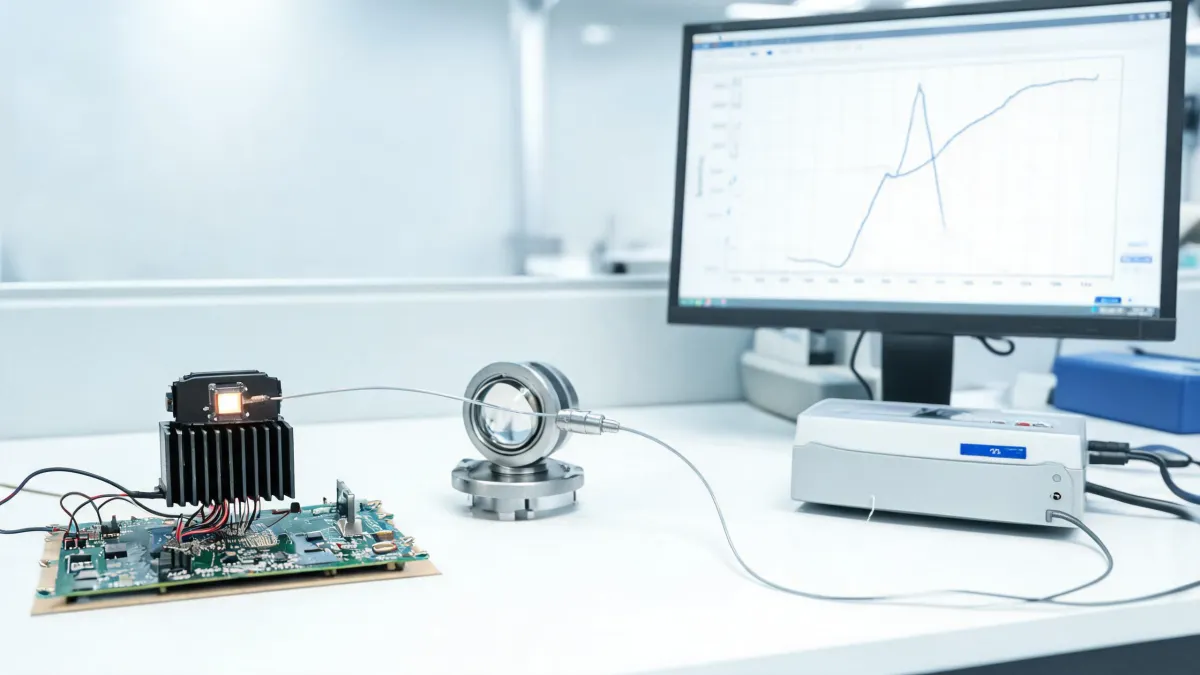
I was standing at our incoming inspection table with a color meter, a power supply, and a growing headache. We had 5,000 reels of 24V COB LED strip waiting for approval. The project was a private-label run for a European distributor—one of those orders that looks simple until it is not.
My role is quality and brand compliance. I review every LED panel, strip, module, and driver before it reaches a customer. Roughly 220 SKUs per quarter, sometimes more. In 2024, we rejected about 19% of first deliveries for color shift, flux variance, or traceability gaps. That percentage is not a badge of honor. It is a warning.
The project started with a reasonable assumption
The client needed an LED strip OEM partner for a 2700K/3000K/4000K line, CRI 90+, 24V, with tight color consistency. We specified Lumileds COB LED because the brand has a reputation for quality, a wide product range, and compliance documentation. That was the easy part.
We sent the spec to a contract manufacturer. They confirmed Lumileds LED inside. The samples looked good. Color was consistent. CRI was where it should be. I approved the first production run. That was my mistake.
First delivery: the numbers looked fine, the eyes did not
Incoming inspection started normally. We tested CCT, CRI, flux, power, and visual color. Most reels were close. But a cluster of 3000K reels measured closer to 3140K and 3180K. Not huge on paper. Serviceable, but not sellable for a brand-critical project.
Side by side, the warm white looked greenish. Our spec called for tight color consistency—what most B2B buyers would describe as 3-step MacAdam or SDCM. These were closer to 5-step. The vendor said it was within industry standard (which, honestly, did not help our launch date).
Did the LEDs come from Lumileds? Probably. Did that alone make the strip compliant? No. Here is the thing: a brand component is not a QC system. Binning, PCB thermal design, solder quality, and reel-level sorting decide the final output.
We rejected the batch. The redo cost us around $22,000—no, $21,000, I am mixing it up with another rework. Either way, it delayed the launch and forced me to explain to the client why a Lumileds COB LED project could still fail incoming inspection.
The frustrating part
The most frustrating part: suppliers kept saying Lumileds inside as if that closed the conversation. You would think a traceable brand LED would guarantee consistency, but assembly and binning vary. A reel can carry the right logo and still miss the color spec.
I still kick myself for not requiring bin code and LM-80 data in the first purchase order. If I had, we would have caught the mismatch before 5,000 reels were made. That is a lesson learned the hard way.
The turn: stop auditing logos, start auditing data
We paused the project and rebuilt the spec. Instead of asking only whether the strip used Lumileds LED, we asked which Lumileds LED series, which bin code, and what test data supported the finished product.
Per IES LM-80 testing and TM-21 projection methodology, lumen maintenance should be based on manufacturer test data, not a generic lifetime claim. ANSI C78.377 defines nominal CCT bins, but it does not guarantee tight color consistency. That is why a 3-step MacAdam or SDCM requirement matters in the purchase order.
We also asked for UL 8750 documentation for the finished LED equipment, RoHS and REACH compliance, PCB copper thickness, thermal pad specification, and reel-level traceability. The original contract manufacturer could not provide reel-level bin codes. That was the real problem. Not the logo. The data.
We shifted to a different LED strip OEM with documented Lumileds COB LED sourcing and binning. They supplied bin codes, LM-80 reports, TM-21 projections, and a clear incoming inspection protocol. The second batch of 5,000 reels passed. CCT stayed within spec. CRI was 92 to 94. Visual color matched across reels. The client approved.
What changed between 2019 and 2025
In 2019, many B2B buyers asked one question: is there a brand LED inside? By January 2025, that question is not enough. The industry has evolved. The fundamentals of quality control have not changed—verify, document, test—but the execution is more data-driven.
Now, for an LED panel manufacturer, using Lumileds LED is a starting point, not a finish line. A panel also depends on optical design, diffuser quality, driver compatibility, and thermal management. Ask for LM-80 and TM-21 data instead of marketing language about lifetime.
For an LED strip OEM, the critical documents are bin code, color tolerance, CRI, voltage drop, adhesive performance, and IP rating. For a distributor building an LED strip distributor buying guide, include the questions that actually prevent returns: Which Lumileds LED series and bin? Can you provide LM-80 and TM-21 data? What is the color tolerance? What is your reel-to-reel traceability? What happens when a batch fails?
Look, I am not saying every order needs lab-grade testing. I am saying the spec has to match the risk. A private-label run for a brand-critical client is not the place to rely on a logo.
A short checklist we now use
- LED series and bin code from the Lumileds LED datasheet.
- LM-80 report and TM-21 projection for the exact LED series.
- Color tolerance in MacAdam steps or SDCM.
- Incoming and outgoing QC records.
- Traceability from reel to finished strip or panel.
As of January 2025, at least, that checklist has become standard in our PO template. It is not glamorous. It works.
Result and reflection
We launched two weeks late. We kept the account. We also changed our purchase order template so that Lumileds LED claims require supporting documents before production, not after. That one change has saved us more than one awkward conversation.
My experience is based on about 180 LED strip and panel orders, mostly mid-volume B2B runs. If you are working with architectural, hazardous-location, or extreme-environment fixtures, your testing protocol might need to be stricter. I have only worked with a handful of those projects, so I cannot speak for every segment.
If I remember correctly, the first batch shipped in early February. I want to say it was 5,000 reels, but don't quote me on the exact count. The exact number matters less than the lesson: Lumileds COB LED can be a strong foundation, but it is not a substitute for documented binning, thermal design, and reel-level QC.
The question is not simply, 'Do you use Lumileds?' The question is, 'Can you prove which Lumileds LED, which bin, and how you validated it in the finished strip or panel?'
That distinction is what turned a rejected batch into a better process.